
How to choose the thickness of wool insulation
Published on 03.09.2026 · Isoflect Insulation technical team
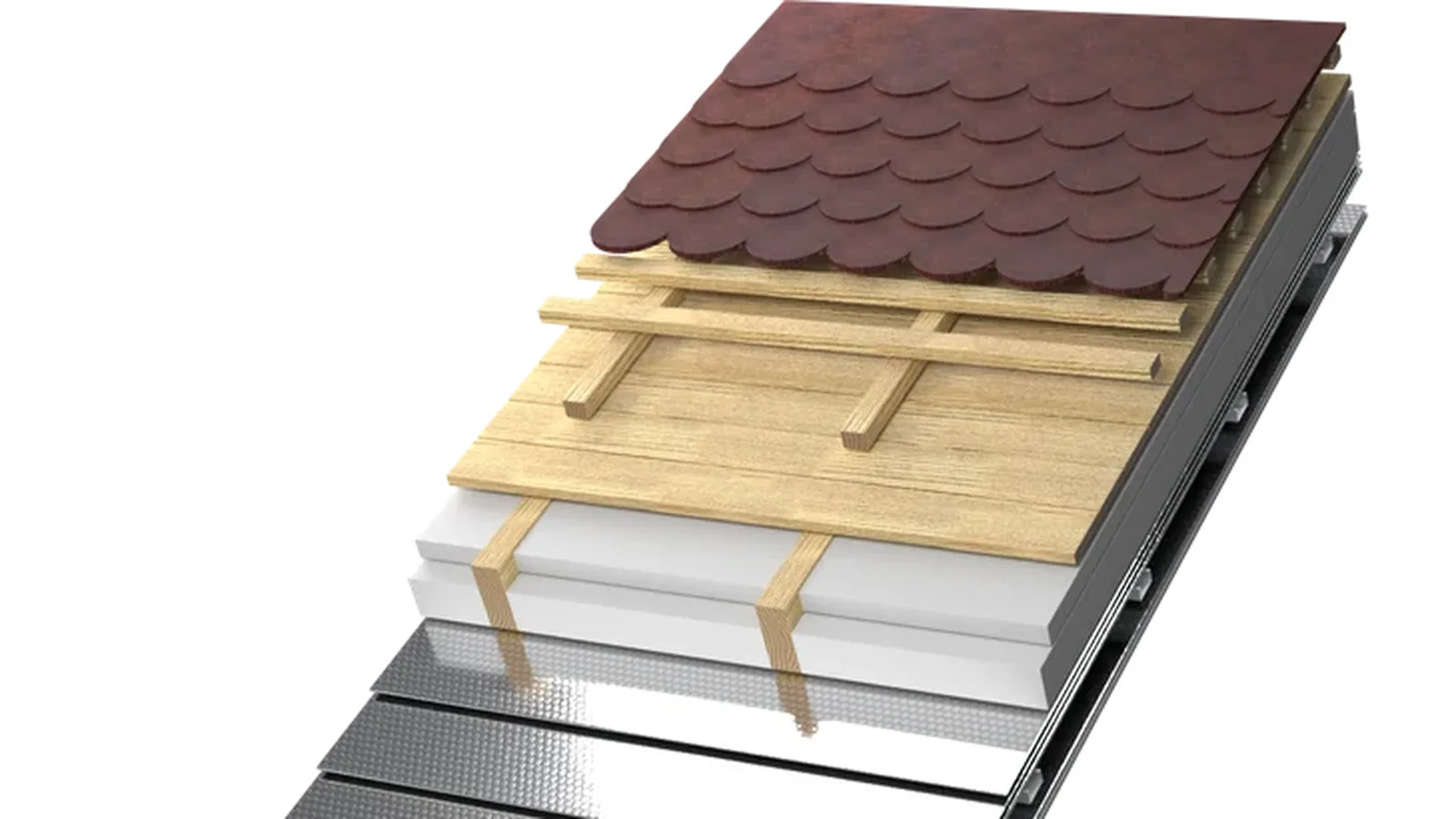
A 5 cm layer of wool insulation installed flawlessly will not have the same effect as a 15 or 20 cm system chosen for the correct area of the house. When you ask yourself how to choose the thickness of wool insulation, you are not merely looking for a number: you are determining how much heat the dwelling retains in winter, how resistant it is to overheating in summer and how well the structure is protected against the risk of condensation.
The correct thickness depends on the installation location, on the existing material in the wall or roof, on the Lambda thermal conductivity of the wool and on the desired final performance. A predictable choice means treating the insulation as part of a system: thermal insulation layer, vapour control, airtightness and, where necessary, protection against water and wind.
How to choose the thickness of wool insulation according to the area
There is no universal thickness for the entire house. Heat is lost differently through the roof, the walls and the floor, and the available space can change the technical solution completely. In a renovation, for example, a smaller thickness with a good Lambda value may be more effective than a thicker wool insulation with modest thermal performance.
Roof spaces and habitable attics: the area with the greatest potential
The roof and the ceiling slab above the top storey are generally the areas that warrant the greatest thickness. Warm air rises, and an uninsulated roof space or an insufficiently insulated habitable attic can become the main source of heat loss.
For a non-walkable roof space, a total layer of approximately 20-30 cm of wool insulation is frequently an effective choice, depending on the Lambda value and the build-up of the ceiling slab. Layers installed crosswise reduce the thermal bridges created by joists or profiles and help to cover the surface uniformly.
In a habitable attic, the thickness available between the rafters may be limited. The solution is not automatically to compress the wool. Compression can reduce the insulating capacity and may affect the installation. Instead, the insulation between the rafters can be supplemented with an additional layer below the rafters, followed by a vapour control membrane and careful sealing of overlaps, corners and service penetrations.
For owners of A-frame houses, this approach is particularly useful. The pitched structure has few vertical surfaces, and every unsealed area can produce draughts, discomfort and hidden condensation over time.
External walls: the thickness must be matched to the structure
For external walls, the thickness of the wool insulation is determined by the substrate material and the installation method. A solid masonry wall, a lightweight timber frame and a ventilated façade have different requirements.
In many projects, 10-15 cm represents a practical range for significantly improving wall performance. For more demanding energy targets or for walls with poor performance, greater thicknesses may be required. The space at the windows, the depth of the reveals, the position of services and the fixing details must be analysed before ordering.
In ventilated façades, the wool insulation must be properly protected against air movement and accidental moisture. In framed walls, it is not sufficient to fill the cavity with wool insulation: the continuity of the air barrier and vapour control determine whether the system remains dry and performs well.
Internal walls: acoustic comfort may matter more than thickness
For internal partitions, the choice of wool insulation thickness is often aimed at reducing noise, not merely heat transfer. A thickness of 5-10 cm, chosen according to the depth of the profiles and the type of wall, can attenuate conversations, noise from building services and sounds between rooms.
The result, however, depends on the entire assembly. Good wool insulation in a wall with perimeter gaps, unsealed electrical boxes or boards fixed rigidly to the structure will not deliver the expected sound insulation. Sealing and installation details are as relevant as thickness.
Floors and floor slabs: choose without sacrificing the finished floor level
Beneath the floor, the thickness is limited by the available height and by the required compressive strength. For intermediate floors between storeys, wool insulation can contribute above all to acoustic comfort and to the reduction of impact noise, together with resilient layers and suitable floor systems.
For floors above cold spaces, the thickness of the thermal insulation becomes more important. Nevertheless, a material intended for walls is not automatically suitable beneath a screed or beneath a loaded floor. Always verify the behaviour under compression and moisture, as well as compatibility with the underfloor heating system.
Lambda explains why two centimetres are not always equal
Lambda, denoted by λ, indicates how easily a material conducts heat. The lower the Lambda value, the better the material insulates at the same thickness. For this reason, comparing wool insulation solely by centimetres can lead to an incorrect decision.
The thermal resistance of a layer is estimated simply: the thickness, expressed in metres, is divided by Lambda. For example, a 15 cm wool insulation with a Lambda of 0.035 W/mK has an approximate thermal resistance of 4.29 m²K/W. A 15 cm wool insulation with a Lambda of 0.040 W/mK provides approximately 3.75 m²K/W. The difference becomes relevant over large surfaces and over the course of many heating or cooling seasons.R (m²K/W), thermal resistance: the extent to which the layer or assembly resists the passage of heat; the higher it is, the better it insulates. What it means →λ (W/mK), thermal conductivity: how easily the material conducts heat; the lower it is, the better the material insulates. What it means →
For readers accustomed to the American system, this value may be correlated indicatively with the R-value, but it should not be compared automatically without verifying the complete system and the local building requirements. Walls, roofs and floors also include other layers that influence the final performance.
Do not choose by thickness alone: verify these installation conditions
Thick insulation can deliver poor results if it is damp, interrupted by gaps or crossed by thermal bridges. Before selecting the product, verify whether the substrate is dry, whether there are leaks and whether the routes of cables, pipes or recessed spotlights will interrupt the insulating layer.
In roofs and habitable attics, membranes play a decisive role. A diffusion membrane installed towards the exterior can help vapour escape from the structure, while a vapour control membrane correctly installed on the warm side limits the penetration of moist air into the wool insulation. The exact choice depends on the type of roof, the ventilation and the existing materials.
Another frequent error is leaving small joints between boards or around the perimeter. Air circulates through these gaps, and the loss of performance can be disproportionately large. The wool insulation must be cut precisely, installed without compacted areas and supplemented with tapes and sealing accessories compatible with the membranes used.
When it is worth choosing a greater thickness
It is worth investing in a thicker layer when the intervention is difficult to repeat: beneath the roof covering, behind finishes or in a roof space that will later become habitable space. The additional cost of a few centimetres of wool insulation is often lower than the cost of dismantling the finishes a few years later.
On the other hand, the maximum thickness is not always the intelligent solution. If a wall has leaks, a habitable attic lacks the necessary ventilation or the vapour barrier is interrupted, a greater thickness may merely conceal a problem that will manifest itself later. First, the moisture, the continuity of the layers and the thermal bridges are corrected; then the thickness is optimised.
For a reliable result, note the installation area, the available thickness, the structural material and the principal objective - savings on heating, summer comfort, quietness or protection against condensation. With these data, the Isoflect team can guide the choice towards an insulation package with certain and predictable performance, adapted to your project, rather than towards a thickness chosen on the basis of assumptions.
Not sure which Isoflect product is right for you? See the Isoflect Wolle range or open the package configurator to find out exactly what you need and in what quantity.