
Review of the REFLECTIVA membrane for habitable attics
Published on 15.09.2026 · Isoflect Insulation technical team
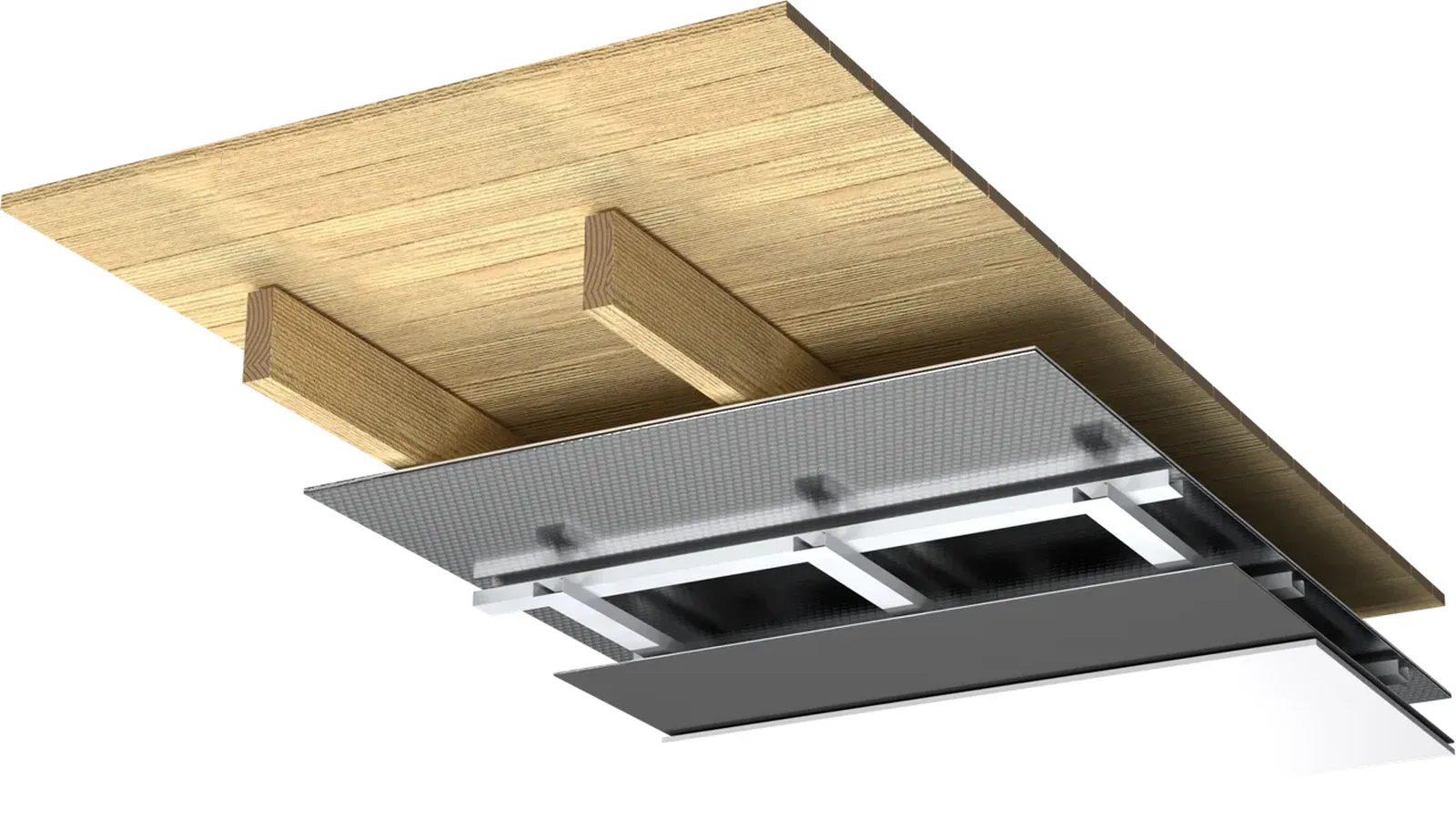
A loft room that overheats in summer, loses heat in winter or smells of damp does not, as a rule, have a single problem. The layers may be incomplete, the joints may not be airtight, or vapour may reach the cold zone of the roof. This review of the REFLECTIVA membrane examines precisely the role that a reflective membrane can play in a well-built system: not as a miraculous solution, but as a technical layer that contributes to moisture control, airtightness and thermal comfort.
The appropriate format for such an assessment is a practical one. A membrane is not judged solely by its metallised appearance or by the thickness of the roll. The result depends on its position in the system, on the continuity of the installation, on the available air space and on the insulating material with which it works.
Review of the REFLECTIVA membrane: what it realistically promises
The REFLECTIVA membrane is designed for applications in which several functions are required in a single layer: reflection of thermal radiation, control of water vapour movement and airtightness of the interior plane, when the installation is carried out correctly. Depending on the chosen configuration, it can supplement the main insulation of mineral wool, ecological fibre or another thermal insulation material, reducing the risk that warm, humid air from the dwelling penetrates the structure in an uncontrolled manner.
The real advantage is integration. In a habitable loft room, for example, it is not sufficient to add more insulation between the rafters. If interior air passes through gaps, sockets, perforations or open joints, it can carry vapour towards the cold zones. There, the moisture may turn into condensation, with effects on the timber, the plasterboard and the performance of the insulation.
A reflective membrane does not replace the required thickness of thermal insulation. It complements the system. This distinction matters particularly for owners who expect a thin membrane to provide, on its own, the same thermal resistance as a substantial layer of insulation. Reliable and predictable performance is achieved when each layer performs its function: the thermal insulation limits heat transfer, the membrane controls air and vapour, and the tapes and accessories maintain the continuity of the airtight layer.
Where it makes sense to install it
REFLECTIVA is relevant particularly on the warm side of the building envelope, towards the interior of the heated space, in systems for loft rooms, attics converted into usable spaces, lightweight-frame walls and certain floor configurations. The exact position must be determined according to the complete build-up of the building element, not merely according to the name of the product.
In a loft room, the membrane is generally installed on the inner face of the structure and the insulation, before the finish. This positioning allows a continuous airtight plane to be created. The joints must be overlapped in accordance with the system instructions and sealed with a compatible tape. The connections to walls, roof windows, chimneys, pipes and cables require the same attention. A single hole left unsealed does not cancel the entire system, but it may become the point through which humid air repeatedly reaches the build-up.
In non-walkable attics, the decision depends on where the insulation is placed: on the top-floor ceiling slab or between and beneath the rafters. If the attic remains cold and ventilated, the air and vapour control plane must be conceived at the level of the ceiling of the heated space. If the attic becomes a loft room, the membrane becomes part of a more complex assembly, which must also include correct ventilation beneath the roof covering, where necessary.
The reflective effect and the role of the air space
The reflective component is often the main reason why owners choose this type of membrane. However, the effect of reflecting thermal radiation is influenced by the presence of an adjacent air space. If the reflective surface is pressed directly between other materials, its radiant contribution may be lower than in a build-up that retains an appropriate air cavity.
This is not a hidden drawback but a design rule. The membrane must be chosen for the function it can perform in the actual build-up, not for a promise isolated from its context. In climates with very hot summers and intense solar radiation, a correct build-up can support summer comfort. In areas with cold winters, the control of air infiltration and vapour can be equally valuable for protecting the structure and for the stability of indoor comfort.
The type of finish is also worth checking. A secondary structure for plasterboard cladding can create the service space necessary for installations and can help protect the membrane from unnecessary perforations. It is a practical solution, particularly where there are cables, spotlights or HVAC routes in the ceiling.
What we value in a system with REFLECTIVA
The first advantage is better control of details. A continuously installed membrane obliges the installer and the owner to treat gaps, service penetrations and contacts with structural elements correctly. This installation discipline reduces concealed draughts, which are frequently responsible for the sensation of cold near walls or the ceiling.
The second advantage is protection against airborne moisture. Condensation does not occur only when the roof has water leaks. It may also occur inside the structure if vapour from the dwelling reaches sufficiently cold surfaces. The bathroom, the kitchen, drying laundry and everyday occupancy increase the moisture load of the air. An intelligent vapour control solution helps to limit this risk, but it does not eliminate the need to ventilate the house.
The third advantage is efficiency in renovations where space matters. A multifunctional membrane can simplify the build-up by combining important roles in a single layer. For installation teams, this means fewer separate operations and a clearer sequence of work. For the owner, it means a solution that is easier to inspect before the walls or the ceiling are closed.
Limitations and errors that reduce performance
The most frequent error is treating the membrane as a stand-alone product. If the insulation between the rafters is too thin, interrupted or settled, REFLECTIVA cannot compensate for the resulting heat losses. Likewise, if the ventilation space beneath the roof covering is blocked, the problem concerns the entire roof, not the interior membrane.
The second error is installation without sealing at the joints. Stapling the membrane is merely a fixing stage. Sealing tapes, sleeves for penetrations and suitable adhesives are functional elements of the system. They are not optional accessories when the objective is predictable control of air and vapour.
The third error is using the same build-up for every wall or roof. A timber-frame house, an A-frame loft, an extension with a steel structure and the renovation of an old attic have different conditions. Orientation towards the sun, indoor humidity, ventilation, the type of roof covering and the thickness available for insulation all change the recommendation.
Last but not least, the membrane does not repair a rainwater leak. If the roof covering, gutters or junction areas are defective, the water must be stopped at its source before the structure is closed. Control of vapour from the interior and protection against water from the exterior are two distinct functions, which must be addressed together.
How to assess whether REFLECTIVA is suitable for your project
Before purchasing, start from the area, not from the roll. Establish whether you are working on a loft room, an attic, an interior wall, a lightweight-frame exterior wall or a floor. Then check which insulation is present or is to be installed, how much space you have available and where the continuous airtight plane will be located.
Ask yourselves where the cable penetrations, pipes, windows and difficult elements are located. A project with many penetrations requires time and accessories for sealing, not merely more material. Calculate the actual surface area, including overlaps and reasonable cutting waste. A roll chosen strictly according to the net surface area may leave the work incomplete.
For a reliable system, the membrane must also be coordinated with the external side of the roof or wall. Diffusion, ventilation and the drying capacity of the structure must be analysed as a whole. At this point, technical consultancy before installation can prevent costly choices, particularly in renovation projects where the existing layers are not always known.
Practical verdict
REFLECTIVA merits consideration when you are seeking more than mere insulation: an airtight internal layer, vapour control and a reflective contribution integrated into a correct build-up. It is a suitable choice for owners who wish to reduce the risk of condensation and to achieve more stable thermal comfort, without overlooking installation details.
It is not the right choice if the expectation is that it will replace the main thermal insulation or correct the deficiencies of the roof on its own. For durable results, regard the membrane as part of a system with adequate insulation, ventilation where required and careful sealing. A technical check of the layer build-up before the finishes are closed may be one of the best decisions for the health of the building and for absolute comfort in the home.